Log in



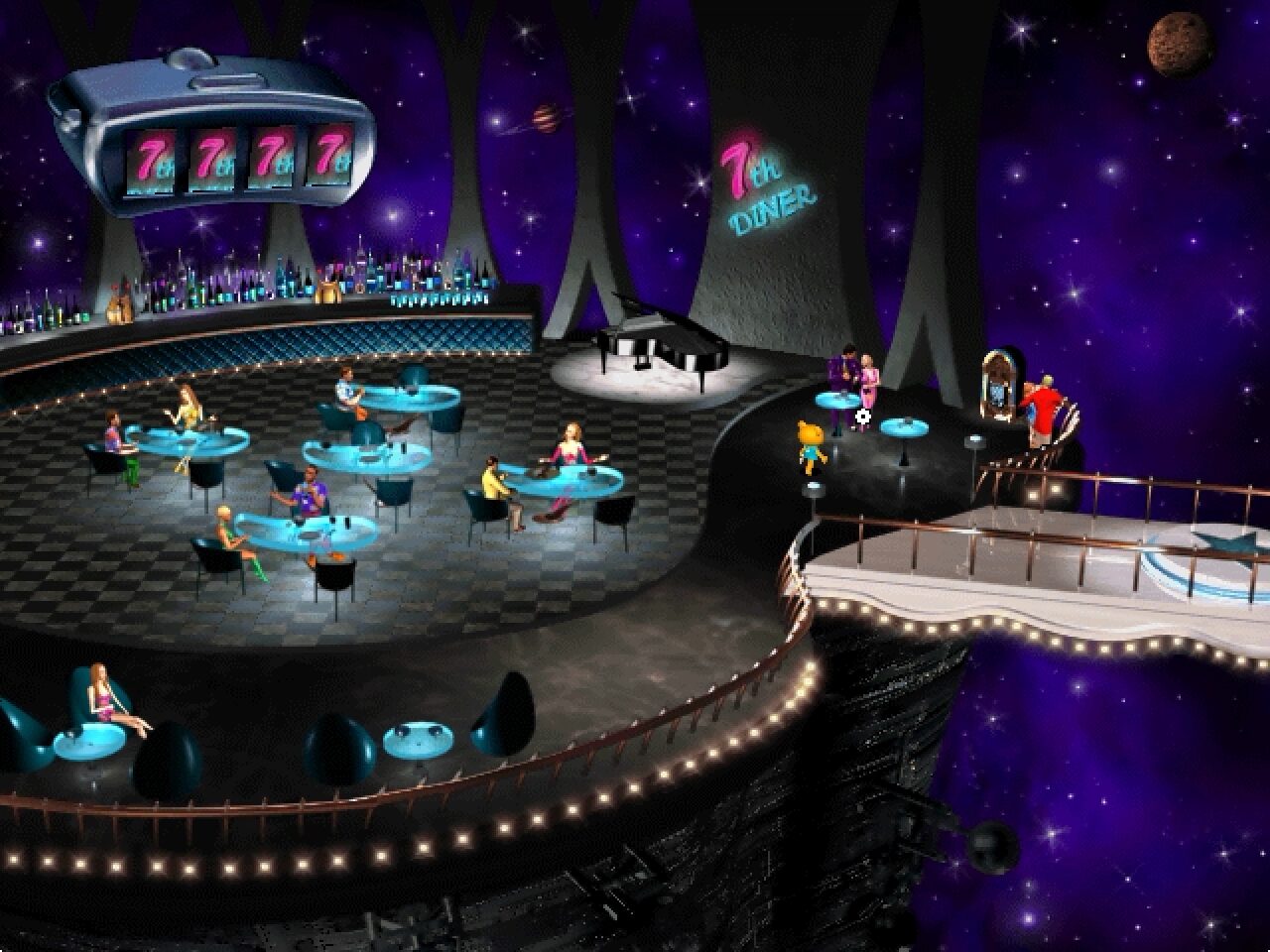

There’s nothing quite like Cookie’s Bustle, a computer game released by Japanese developer Rodik in 1999.
The game has built a cult reputation over the last few years because of its unusual, genre-defying content, which is too complicated and confusing to summarize accurately in one sentence. But we’ll try anyway: You play as a 5-year-old girl from New Jersey, who enters an international sports competition that becomes engulfed in civil war and intergalactic intrigue.
A few years ago, the Video Game History Foundation was donated a rare physical copy of Cookie’s Bustle by multimedia researcher Misty De Méo. We are excited to preserve this rare and artistically unique game as part of our collections.
Because Cookie’s Bustle has been out of print for nearly three decades, we documented the packaging and physical materials of the game in our digital archive for research purposes. Since we are unable to share controlled research access to the game itself, we have also provided access to a video demonstrating the gameplay of Cookie’s Bustle, recorded by community member sebmal. We hope these resources are valuable for researchers who want to understand more about this remarkable game.
Unfortunately, our efforts to document Cookie’s Bustle were impacted by the actions of an aggressive copyright troll. An individual going by Brandon White, or using the corporate name Graceware, SL, has repeatedly sent DMCA takedown notices to the Video Game History Foundation (via the trade association Ukie) over our legal use of materials related to Cookie’s Bustle.
We were not alone in this problem. Since 2022, a number of websites and individual creators have received frivolous takedown requests on behalf of Graceware, covering everything from Let’s Play videos and fanart to simply mentioning the title of the game.
Although Graceware’s actions against us were incredibly disruptive, we saw this as an opportunity to get to the bottom of what was happening.
We looked into it with our legal team, and we do not believe there is any proof that Brandon White actually owns Cookie’s Bustle. He has never been able to produce legally meaningful evidence that he owns any enforceable rights to any part of this game.
We are happy to report that after bringing these facts to Ukie’s attention, Ukie has suspended takedowns for Cookie’s Bustle on behalf of Graceware, SL. This is a big victory for the gaming community, hopefully bringing an end to a rights-squatting campaign that has dragged on for years.
In consultation with our counsel Albert Sellars LLP, we’ve decided to share everything we learned about the rights to Cookie’s Bustle and White’s actions. We hope that documenting the facts of this situation will prevent further abuses of copyright law—and empower creators to stand up for their rights.
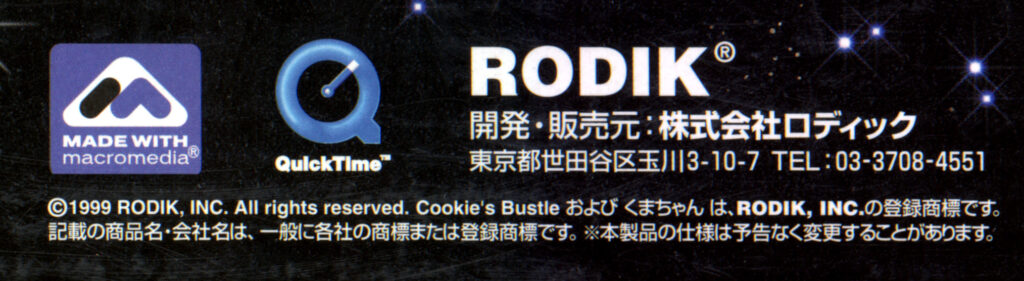
Cookie’s Bustle was published in 1999 by RODIK, Inc. and is currently an orphan work.
The game was published in 1999 with a statement attributing the copyright to RODIK, Inc. The game was only published and copyrighted in Japan. To our knowledge, the game has been out of print since its original release.
The status of RODIK and the ownership of its rights are currently unclear. This makes it likely that Cookie’s Bustle is an “orphan work”, a copyrighted work where the owner is either unknown or cannot be located.
Someone named Brandon White claims he owns Cookie’s Bustle.
Starting in 2021, an individual going by the name Brandon White began taking actions over the intellectual property rights associated with Cookie’s Bustle, including claiming copyright ownership and filing trademark registrations. In some cases, he has used his personal name. In others, the filings were made under the corporate name Graceware, SL. While there is no explicit connection between these two entities, takedowns sent on behalf of Graceware cite Brandon White as the copyright owner.
We don’t know who Brandon White is, where he resides, or what his relationship is with RODIK, Inc. Some of the documents he cites claim that he is based in Japan, while the business information for Graceware, SL points to a fake address in Andorra.
Graceware has no meaningful footprint online or offline and, to our knowledge, has never provided any products or services. The most likely interpretation is that Graceware is a shell company for whoever Brandon White is.
We are skeptical that the owners of RODIK, Inc., a studio that primarily produced fortune-telling software based on traditional Japanese divination techniques, would sell their library to a borderline anonymous holding company that claims to operate in Europe. However, if Brandon White did acquire the rights to Cookie’s Bustle, he should easily be able to produce more information about his ownership of the game.
We’ll come back to that later.
Graceware has a history of sending spurious takedowns related to Cookie’s Bustle.
The sole output of Graceware has been an avalanche of content takedown notices related to Cookie’s Bustle, issued under Section 512 of the Digital Millennium Copyright Act. These takedowns have been large in number and indiscriminate in nature.
From what we have seen, Graceware has sent takedown notices in response to:
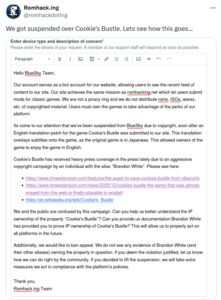
- Playthrough videos and livestreams showing Cookie’s Bustle gameplay, with and without commentary.1,2,3,4
- Screenshots, imagery, and short clips from Cookie’s Bustle.5,6,7
- Fanart of the character Cookie Blair.8,9
- A community-made add-on for Cookie’s Bustle that adds English-language subtitles.10
- Discord chat messages discussing the content of Cookie’s Bustle.11
- YouTube, “Your video has been taken down from YouTube: Windows 95 CD-ROM Showcase (Cookie’s Bustle and more!) (4-17-19),” received by Danny Cowan on October 17, 2022.
 ︎
︎ - Twitch, “You have received a copyright takedown,” received by Danny Cowan on January 6, 2023. ︎
- Vinesauce stream of Cookie’s Bustle, January 22, 2023, no surviving hyperlinks (reuploads removed due to copyright strikes: 1, 2); corroborated by Damiano Gerli, “The Quest To Save Cookie’s Bustle From Obscurity,” Time Extension, April 8, 2024. ︎
- Mumith Ali, “[VGHF Digital Archive] New message from Mumith Ali,” received by Phil Salvador and Kendra Albert on December 9, 2025. ︎
- ClassicsOfGame, “Classics Of Game 134” [YouTube video], uploaded circa 2019, removed due to copyright strike circa 2022. ︎
- Takedowns to The VG Resource website network corroborated in personal communications with Daniel Brown (Dazz), January 5, 2026. ︎
- Twitter Support, “Case# 0334567779: We’ve received a DMCA notice regarding your account [ref:00DA0000000K0A8.5004w00002lmEJx:ref],” received by Misty De Méo on August 4, 2023. ︎
- Takedowns to The VG Resource website network corroborated in personal communications with Daniel Brown (Dazz), January 5, 2026. ︎
- Takedowns to defunct social media platform cohost corroborated in personal communications with jae kaplan and Misty De Méo, January 28, 2026. ︎
- “Bluesky Bot Account – Suspended By Brandon White,” Romhack.ing, December 19, 2025; corroborated by Damien McFerran, “Romhack.ing’s BlueSky Account Gets Suspended Over Cookie’s Bustle English Patch,” Time Extension, December 19, 2025. ︎
- Elias Daler, “Just got hit by multiple DMCA strikes by talking about Cookie’s Bustle on Discord,” posted on X, February 3, 2026. ︎
Most of these cases would obviously be fair use and should not have been subject to takedowns.
The speed and aggressiveness of these takedowns was unusual, even within the video game community. Several YouTube videos (1,2) have documented this behavior; these remain some of the only videos of Cookie’s Bustle that are still available on YouTube.
We have not been immune from this either. Since last year, the Video Game History Foundation has received three takedown notices from Graceware for materials related to Cookie’s Bustle in our digital archive.
In the most egregious example, we received a takedown from Graceware pointing to a webpage describing that we own a copy of Cookie’s Bustle. This page explicitly says that the game files are “Not Available” and does not show any copyrighted material—even images—yet it was still targeted for a takedown. Graceware seems to be suggesting that non-profit archives even describing the existence of the game Cookie’s Bustle is copyright infringement. This position would almost certainly be shot down in court.
Every takedown notice from Graceware has asserted that they are the owners or exclusive licensees of Cookie’s Bustle. Until now, the validity of these takedowns has not been closely examined.
We intend here to break down the facts of Graceware’s claims and the pattern of their behavior.
Brandon White’s “copyright registrations” are legally meaningless and do not confer him any rights to the game Cookie’s Bustle.
Graceware’s main support for their takedown notices has been a series of registrations filed by Brandon White through INTEROCO “Copyright Office” in 2021. These “registrations” claim ownership for a variety of aspects of Cookie’s Bustle, including the source code, game concept, and character designs.
Before we go any further, our lawyer wanted us to explain a little background about how copyright law works and why that’s relevant in this situation.
Copyright law is territorial, which means that rights are specific to the country where a work was published. However, through treaties like the Berne Convention, most countries have standardized around the same rules. In countries that are a party to the Berne Convention (which includes the United States, the United Kingdom, and Japan), copyright protection exists for a work from the moment it is created. You don’t need to file anything to secure those rights!
However, copyright registration can gain an author additional rights. In the United States, it’s required that you register a work with the United States Copyright Office before filing suit against another party for infringement. Additionally, registration can serve as proof of ownership of a copyright interest, which is what Brandon White was using the “registrations” for here.
But here’s the thing: These are not real copyright registrations, and INTEROCO is not a government agency.
INTEROCO is a private company in Germany that bills itself as a “full-automated electronic depository.” It is effectively a digital version of mailing yourself a letter to get it date-stamped by the Post Office, a comparison that INTEROCO explicitly makes on their About Us page.
In theory, authors and creators could use INTEROCO to prove that they published a work on a specific date. However, it would be absurd to claim that depositing a copy of a work that’s already been published means that you own the rights to it. It would be like mailing yourself a cartridge of Super Mario Bros., then claiming the postmarked envelope is proof you control the copyright to Super Mario Bros. A deposit on INTEROCO for a previously copyrighted work—such as the ones made by Brandon White—is effectively meaningless.
To prove our point, we attempted to register our own copyrighted works with INTEROCO, just to see how the process worked. Then things got weird.
As we expected, we were able to register an account on the INTEROCO website without any oversight from their staff. This appeared to grant us editing privileges on their site, including access to an interface that would have allowed us to create our own entries for copyright deposits (see image below). But then, after we filled out a separate “Order” form on the INTEROCO website, we were connected to a third party in Dubai who attempted to call us using WhatsApp; they claimed that registration was not automated and actually cost $12,000 per item. We could not verify the authenticity of these emails.
INTEROCO does not list an abuse policy and did not respond to multiple requests to their support email for information about how they handle fraudulent deposits. The third party in Dubai claimed that INTEROCO does not verify registrations and deflected responsibility for questionable copyright registrations on their website to law enforcement.
This all suggests that INTEROCO is not a reliable source. Not just for copyright, but for anything, really.
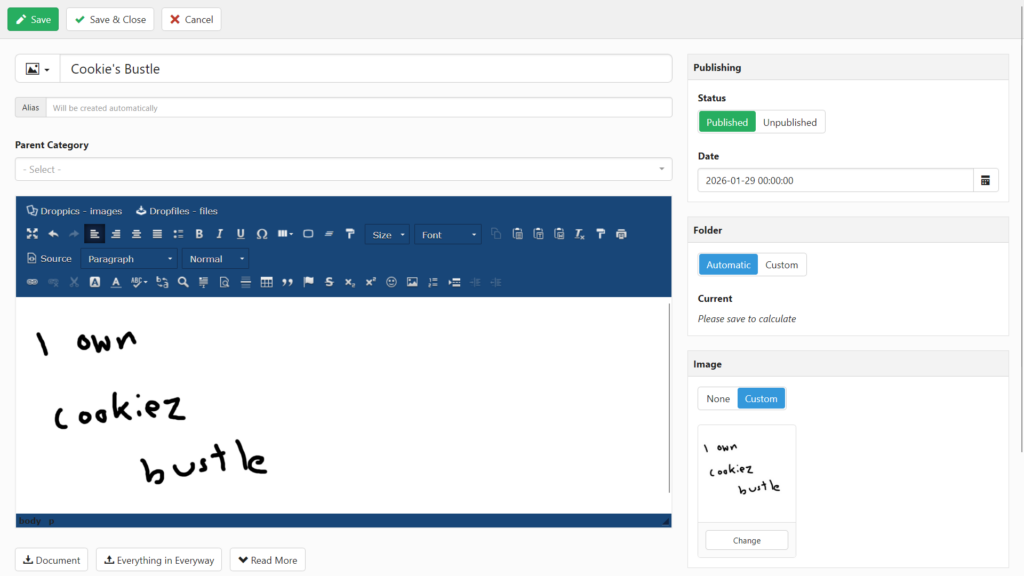
Several community members have pointed out that Brandon White’s deposits on INTEROCO do seem to include unique art assets and source code related to Cookie’s Bustle. However, these do not prove ownership of the game’s copyright. There are many reasons why someone might have these assets. For example, the VGHF Library has high-resolution art and development assets from Tomb Raider III. This does not mean that we own the copyright to Tomb Raider III.
When issuing takedowns, Brandon White has pointed to the INTEROCO “copyright certificates” as his proof of ownership for Cookie’s Bustle. If White does actually own the rights to Cookie’s Bustle, these deposits do not show that. However, it’s understandable that these “registrations” caused confusion. If you don’t know the specifics of how copyright registration works, you might assume that an official-looking source like INTEROCO is a reliable indicator of who owns the rights that are listed. It’s not.
Brandon White’s trademark applications have not been approved and do not confer him any rights to the game Cookie’s Bustle.
Graceware, SL has also applied for trademarks in the United States to use the name “Cookie’s Bustle” on a variety of products, including computer games, board games, clothing, and assorted merchandise. Although we haven’t seen Brandon White or Graceware cite these in DMCA notices as proof of ownership, we’ve seen these applications come up in discussions about the rights for Cookie’s Bustle, so we want to explain what they actually mean.
In short, not only are these trademark applications currently unenforceable, they also do not indicate any other ownership rights related to Cookie’s Bustle.
The “Cookie’s Bustle” trademark applications were made with “intent to use,” meaning the mark is not actually being used yet. The US Patent and Trademark Office considers an ITU application to be “pending” rather than “registered.” Until a trademark is actually being used in commerce for the products or services described, an ITU trademark application is basically just a placeholder. It gives the person who registers an earlier first usage date, but nothing else.
Graceware applied for these trademarks in December 2022. Since then, they’ve had to file four extensions on their deadline to prove that they have actually used the name “Cookie’s Bustle” in commerce. Which, to our knowledge, they haven’t.
Currently, all Graceware can do is prove that they applied for these trademarks. Until they begin to actually produce products with the “Cookie’s Bustle” mark, these applications do not grant them rights to the name.
Additionally, while this is often misunderstood by the public, trademark registrations have no bearing on copyright ownership. If a trademark expires, it’s possible for anyone to apply for it, regardless of the other rights that may be associated with it.
In fact, this happened recently in video games! In 2024, a homebrew developer registered the trademark for Tengen, which was previously used by Warner Communications as the name for their long-defunct home console game publishing brand. Although he can now use the name Tengen for his business, this does not grant him ownership of any other rights associated with Warner’s use of Tengen or the games published under that brand.
The same logic applies here. The original trademark for the name “Cookie’s Bustle” by RODIK, Inc. expired in 2001. Graceware applied for the trademark in 2022 using the service OnlineTrademarkAttorneys.com. This process does not prove any ownership of the game Cookie’s Bustle.
Brandon White abuses cheap legal resources to send nuisance takedown requests in bulk.
Based on everything we’ve seen, Brandon White has used low-cost services to make minimally persuasive ownership claims for IP that he may or may not actually have any rights to. This strategy extends to the method that White uses to make his takedown requests: by exploiting cheap, abusable resources that have little oversight.
Graceware’s takedown notices are filed on their behalf by Ukie, the Association for UK Interactive Entertainment. Ukie is the United Kingdom’s largest video game trade organization, representing and providing professional services for over 2000 member companies. One of those services, according to Ukie, is free takedown requests for infringing use of copyrighted materials. Graceware is a member of Ukie and appears to use that service.
This service is run by Ukie’s IP coordinator Mumith (Mo) Ali and his IP management company Web Capio. Ali and Web Capio are the originators of takedowns sent out by Graceware, often being named interchangeably with Ukie.

As official as it sounds to have a major trade organization sending takedowns for Graceware, the barrier to joining Ukie and using their legal services is shockingly low. Membership in Ukie costs less than £1000 per year for small companies. So if you have £60 a month, it looks like you can get the UK’s largest gaming trade organization to send free takedown notices on your behalf.

Additionally, while Graceware is a member of Ukie, there are some peculiarities about their membership. Their listing in Ukie’s membership database is misspelled as “Gracewear,” and their listed website, Gracewear.net, was last used by a streetwear company in Los Angeles in 2019 and is currently empty. This is not what you would expect from a company that is, in theory, trying to join a professional community and bring their products to market.
Misusing a trade organization’s legal resources like this is such an unusual strategy that it would be surprising if anyone at Ukie ever suspected something was amiss here. However, if a lawyer, or indeed any person, was engaging in manual review of the DMCA takedowns they were sending, they should have noticed some of these irregularities.
Web Capio has advertised “automated takedown notices” that are not verified by a human.
One reason these irregularities may have gone unnoticed is because of the method that Web Capio (now doing business as Obviously) uses to send DMCA notices.
Web Capio offers “real-time” IP protection services as a frontline defense against piracy and data leaks. By “real-time,” what they mean is that they scrape the web for potentially infringing content and, according to their marketing materials, send out “automated takedown notices.”
Notably, they have bragged that compared to other takedown services, they do not require the majority of their takedowns to be verified by a human.
In other words, Web Capio uses bots to send bulk takedown requests to websites, seemingly without confirming whether they are valid or appropriate. This would explain the large number of spurious takedowns related to Cookie’s Bustle that have been reported.
![Excerpts from the Web Capio website:
"Web Capio offers bespoke anti-piracy services based on quality, and speed. This is achieved by having a team with over 20 years experience in protecting content for the creative industries."
The list of services includes "Automated Takedown Notices."
Further down the page, text explains that "Manual verification" is "[n]ot required on links that have a high match rate."](https://gamehistory.org/wp-content/uploads/2026/01/cookiesbustle_webcapio-1024x593.png)
This behavior is not limited to Cookie’s Bustle. Searching for “Web Capio” brings up a litany of examples of materials being abruptly removed due to a notice from the company (some valid and some not), including an attempt to take down a website for using the words “beatles” and “help” together (p.65). Mumith Ali has publicly spoken about using Ukie’s “clout” to justify sending “hundreds, if not thousands” of takedown notices to individual websites—an appropriate response to mass piracy, but totally inappropriate for the circumstances involving Cookie’s Bustle.
The form-letter takedowns sent by Web Capio on behalf of Graceware—made in Ali’s name under penalty of perjury!—may never have been vetted by anyone practicing law. Ali did not respond to a question from VGHF about whether a lawyer is involved in reviewing claims before they are sent on behalf of Ukie. At minimum, this is irresponsible. At worst, an automated takedown strategy without consulting legal expertise could open Ali and his clients up to liability. In many jurisdictions in the United States, the failure to consider whether a use might be fair can lead to liability under 17 U.S.C. § 512(f).
Importantly, Web Capio and White have never actually brought any legal action related to Cookie’s Bustle. That would require Graceware to follow up with their own legal counsel, which Ali is not. Based on Graceware’s track record and their apparently limited resources, they may not have counsel at all.
Graceware and Web Capio target weak points in the DMCA process.
Based on all the evidence we’ve shown here, we believe most lawyers would not take Graceware’s claims seriously. However, the automated takedowns by Web Capio have been filed in a manner that limits the amount of legal scrutiny they have faced until now.
Under Section 512 of the Digital Millennium Copyright Act, when a platform receives a takedown for user-submitted content, they are obligated to remove it or face potential liability for copyright infringement. This is why platforms like Twitch and YouTube will automatically remove any item that receives a takedown request. It’s the safest option, because at a certain scale, it is impractical for large platforms to evaluate the validity of every single takedown request they receive.
This is one of the practical weaknesses of the current DMCA takedown system, and Web Capio’s process seems to take advantage of this. From what we have seen, Graceware’s takedown requests have been directed almost exclusively at platforms and service providers.
We experienced this ourselves: In April 2025, we were notified of a takedown request from Mumith Ali on behalf of Graceware. It was not sent to the Video Game History Foundation, nor was it sent to Preservica, which manages our digital archive service and hosts our material.
Instead, Graceware issued the takedown to… Vercel, the web host for our archive portal.
We provide clear instructions for rightsholders who want to request the removal of material in our archive. However, rather than contacting us in this manner, Web Capio’s automated takedown system apparently queried our DNS and sent a request to our web provider instead.
We’ve heard similar roundabout stories from other groups that have received takedowns from Graceware. Rather than addressing the actual websites, which would have the context to identify and potentially dispute an inappropriate complaint, Web Capio targets their underlying services like Vercel, which service millions of users and are more likely to automatically comply with DMCA notices. This has allowed Web Capio and Graceware to quickly and quietly remove material from the internet with little pushback.
Thankfully, in this case, the path of least resistance failed. Vercel took our concerns seriously and did not remove any material or suspend our account in response to Graceware’s takedowns. Since this incident, Vercel has not notified us about any further communications from Web Capio regarding Cookie’s Bustle.
Unfortunately, this still wasn’t the end of Graceware’s nuisance campaign. A few months later, we heard directly from Web Capio, which gave us an opportunity to challenge Graceware’s claims head-on.
Brandon White has been unable to prove ownership of Cookie’s Bustle when requested.
In December 2025, Mumith Ali directly contacted the Video Game History Foundation requesting the removal of the Cookie’s Bustle longplay video. When asked for more information, Ali relayed a message from Graceware, once again pointing to the INTEROCO pages as proof of ownership.
In response, our counsel asked Ali and Graceware (presumably White) to clarify the relationship between Brandon White’s 2021 copyright “registration” and the original 1999 publication of Cookie’s Bustle.
Graceware never responded to that request.
If Brandon White does in fact own the copyright to Cookie’s Bustle, he has not been able to prove it. When asked for documentation to back up his legal threat, he would not produce it. This is not the behavior of someone trying to protect their rights in good faith.
Why would someone do this? The blunt answer is that it doesn’t matter. It is irrelevant whether Brandon White is trolling people or whether he has convinced himself that he owns the rights to Cookie’s Bustle. What we were concerned about was stopping this disruptive behavior—period.
What happened next
In February, we brought this issue to the attention of Ukie CEO Nick Poole, who directed us to Mumith Ali to resolve the issue. In response to our concerns, Ali stated that “most of the URLs reported [were] on good faith based on the source being Graceware” and that Graceware had “verified ownership of the content.” We suspect that when Graceware first presented their INTEROCO “registrations” to Ukie, Ali assumed the information was accurate and authoritative—especially since submitting a false copyright registration to a trade group would be an extremely unusual thing to do.
However, after reviewing our findings, Ali told us that he planned to follow up with Graceware for additional clarification about their copyright claim for Cookie’s Bustle. After all, if they do own Cookie’s Bustle, it should be trivially easy for them to prove it, right?
An entire month passed without resolution. We’re not sure exactly what transpired between Ukie and Graceware, but it sounds like Graceware was unable to provide sufficient proof of their ownership. We hoped this would persuade Ukie to take action—and it did.
According to Ali, as a result of these conversations, Ukie has suspended DMCA takedown services for Graceware.
Without Ukie’s services, Graceware can no longer issue wide-scale automated takedowns for Cookie’s Bustle.
What this means
We feel confident saying that, as a result of our inquiry, Cookie’s Bustle has finally been freed from copyright troll hell. Now we should probably back up and explain what this actually means for users and researchers.
The real owner of Cookie’s Bustle remains unknown. As we said previously, this means Cookie’s Bustle is likely an “orphan work.” That might sound like it confers some kind of special privileges, but orphan works aren’t actually treated differently under copyright law in the United States. Even though the owner of Cookie’s Bustle is unknown, the game is still protected under copyright and is not in the public domain. However, until a proven owner emerges for RODIK’s catalog, it is unlikely that anyone else will take legal action or send further takedowns related to the game.
The most important part here is that fair uses of Cookie’s Bustle should no longer be caught in automated takedowns. Gameplay clips, streams, commentary, documentation, fan works, and other transformative or educational uses of Cookie’s Bustle should be able to exist online for now without interference. We know that many content creators have received takedown notices for streaming Cookie’s Bustle; although those videos are not being restored by Web Capio, re-uploads and future streams should not be affected.
Even though we’ve resolved this situation in practice, there are still underlying problems that have not been addressed. INTEROCO still offers misleading and unreliable information about copyright registration that can be abused by bad actors. And automated takedown systems, like the one used by Web Capio, can still provoke unreasonable responses to fair uses of copyrighted material—and expose their users to liability under the Digital Millennium Copyright Act. In our correspondence, Mumith Ali stated that in response to this situation, Web Capio has put additional measures in place to escalate counterclaims, which may help users push back in similar circumstances.
What else could happen
Although Graceware can no longer use Ukie’s legal services, this may not fully prevent them from taking specious actions related to Cookie’s Bustle.
It is plausible that Graceware could find another representative to send takedowns on their behalf, albeit less effectively than they had through Web Capio. It is also possible that they could attempt to file takedowns independently, citing Brandon White’s discredited copyright claims on INTEROCO.
But especially after all of this, Graceware—and anyone representing them—should review their legal obligations under 17 U.S.C. § 512 before sending additional DMCA notices. We have not ruled out legal action if we are harmed by future spurious takedown requests from Graceware.
Additionally, Graceware still has three outstanding trademark applications in the United States for the name “Cookie’s Bustle.” These are the only rights associated with Cookie’s Bustle that Graceware has even a remotely plausible claim to. However, these applications have not been approved by the USPTO yet, which limits their practical use to effectively nothing. The applications will expire in April 2027.
Know your rights.
We don’t expect every user on the internet to have expert lawyers ready to defend them against copyright trolls. However, you are within your rights to push back.
With the caveats that we are not your lawyers and this does not constitute legal advice, here are some practical tips on how to respond to any takedowns you receive from Graceware:
- If you are contacted by someone claiming to represent Graceware, you can ask them to provide proof of copyright ownership or an exclusive license for the original 1999 computer game Cookie’s Bustle and clarify their relationship with the original copyright owners, RODIK, Inc. Our experience suggests that they are unlikely to continue responding.
- If you believe that content you posted on another platform related to Cookie’s Bustle has been removed unfairly, you can submit a DMCA counterclaim to restore it (see: YouTube, Twitch, Google). If you file a counternotice, Graceware’s only option to remove the material is to sue; this would require them to actually provide evidence that they own the relevant rights, which they have been unable to do so far.
- If your material is removed inappropriately, you (and the platform that received the takedown) may also be able to bring legal action against Graceware under DMCA section 512(f).
We encourage you to reference this post if you need to debunk Graceware’s claims. We hope that this rigorous accounting of Graceware’s behavior will make it easier to shut down their abuses in the future.
It might seem excessive for us to make a public stand over this one obscure computer game. But this is bigger than just Cookie’s Bustle.
As we reported in our landmark 2023 Survey of the Video Game Reissue Market in the United States, experts estimate roughly half of game and software titles released before 1995 have become orphan works due to poor documentation of their ownership. Video games, having been treated like disposable toys for so long, are uniquely susceptible to this problem, more than art, literature, music, or any other medium.
As a result, it is uniquely easy for bad actors to muddy the historical record for video games, to sow disinformation about who owns what, and to interfere with the efforts of historians, documentarians, and archivists—and even individual citizen researchers—to celebrate and understand the history of video games.
This is why we’re pushing back. If we care about video games as art and as cultural history, we need to stand up for our legal right to document out-of-print orphan games, and to confront the copyright trolls who stand in the way.
We did not comply with any of the spurious DMCA takedown notices we received from Graceware, SL and have never removed any material related to Cookie’s Bustle from our digital archive.
The post We’ve freed Cookie’s Bustle from copyright hell. Here’s how. appeared first on Video Game History Foundation.



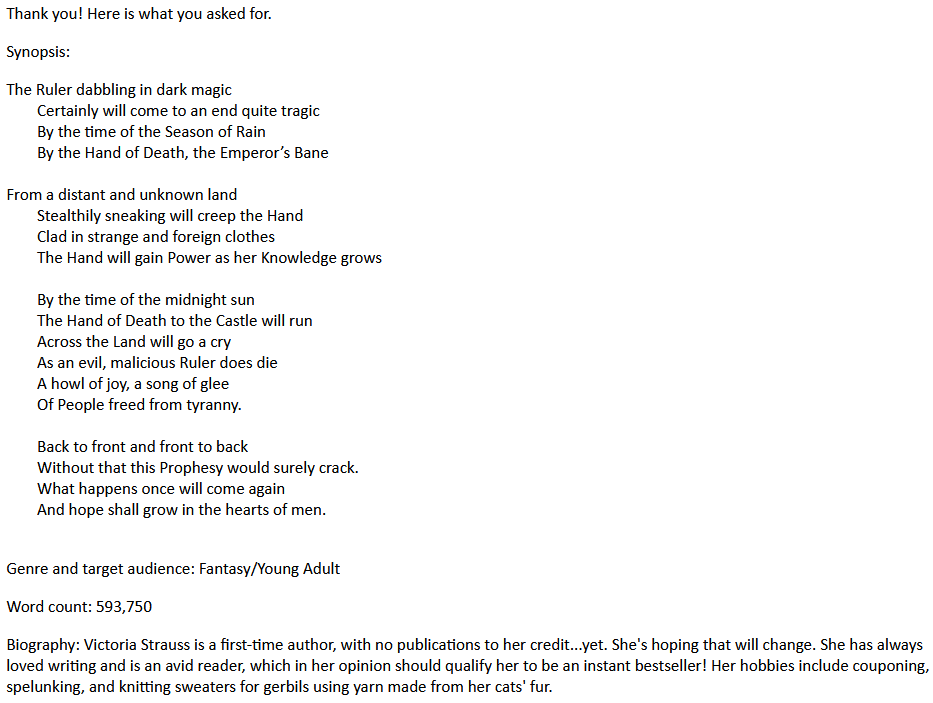
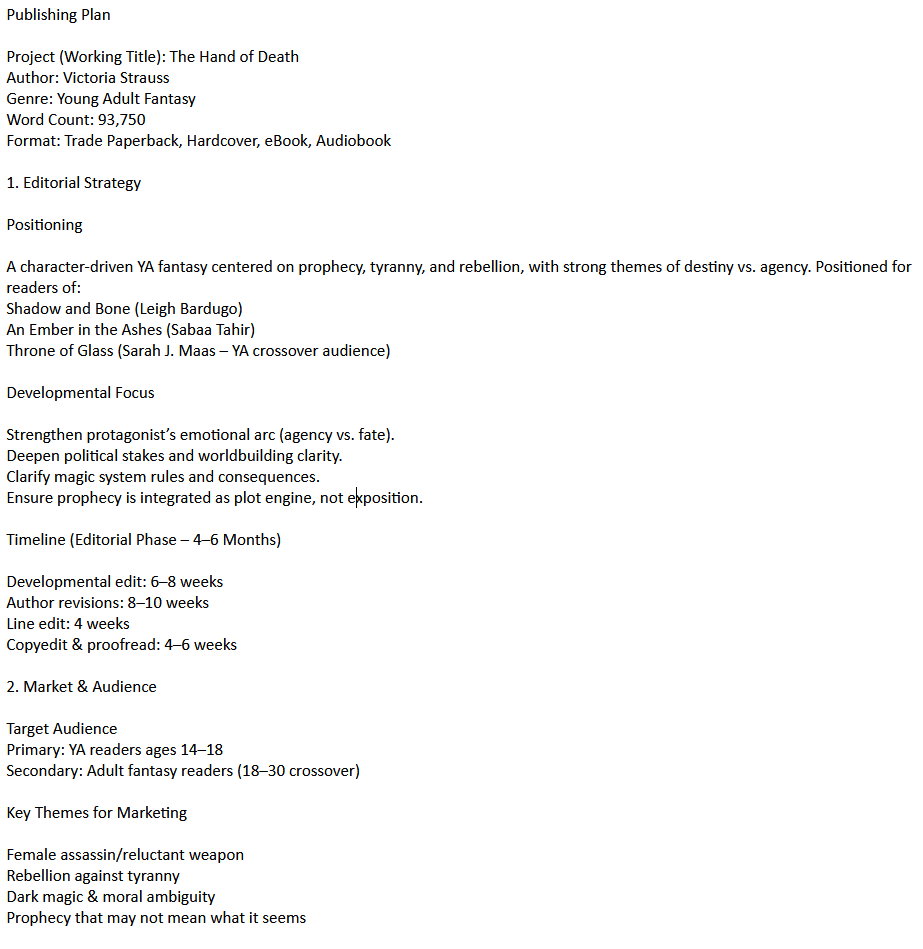
![Subject: Re:
Date: Thu, 12 Feb 2026 00:54:55 +o100
From: Simon & Schuster LLC <simonschusterllc4@gmail.com>
To: Victoria Strauss [redacted]
Which payment method works best for you? Would you prefer a wire transfer or PayPal? Also, please let me kknow the amount you're comfortable paying.](https://writerbeware.blog/wp-content/uploads/2026/02/Simon-Schuster-impersonation-payment-1.png)
![Subject: Re:
Date: Fri,, 13 Feb 2026 18:01:30 +0100
From: Simon & Schuster LLC <simonschusterllc4@gmail.com>
To: Victoria Strauss [redacted]
Dear Victoria,
I’m really glad you asked your question it shows that you’re thinking like a professional author.
You’re absolutely right that a traditional publisher such as Simon & Schuster does not charge authors upfront. In that model, they invest in a very small percentage of submissions and assume all financial risk.
However, that path is highly competitive and selective. Fewer than 1% of submitted manuscripts are acquired by major traditional houses. The alternative independent publishing done strategically and professionally allows you to move forward without waiting for gatekeepers, while still producing a book that meets industry standards.
The investment I mentioned is not a “fee to get published.” It is a targeted investment in professional tools that directly impact:
• Market positioning
• Editorial polish
• Metadata optimization (which affects discoverability)
• Professional presentation and credibility
• Distribution readiness
In independent publishing, you are essentially stepping into the role of the publisher. And like any publisher, there are production and positioning costs if the book is to compete seriously in the marketplace.
The key difference is this:
With a traditional publisher, they invest in you but you give up control, timeline, and a significant share of royalties.
With an independent model, you invest in your own project and retain control, ownership, and higher long-term earnings potential.
My goal is not to sell you anything unnecessary. It’s to ensure that if you choose to publish independently, you do so in a way that protects your credibility and maximizes your book’s success. Cutting corners in the early stages often costs more later in missed sales, poor reviews, or limited visibility.
If your goal is strictly traditional representation, I will respect that and can even outline the proper route for querying agents. But if your goal is to see your book professionally published and positioned within a predictable timeline, then investing in the right tools is often the most strategic and empowering choice.
Ultimately, this is about choosing the path that aligns with your goals, risk tolerance, and timeline. I’m here to support whichever direction you decide transparently and professionally.
Warm regards,
Zahara Page](https://writerbeware.blog/wp-content/uploads/2026/02/Simon-Schuster-impersonation-rationale-1.png)
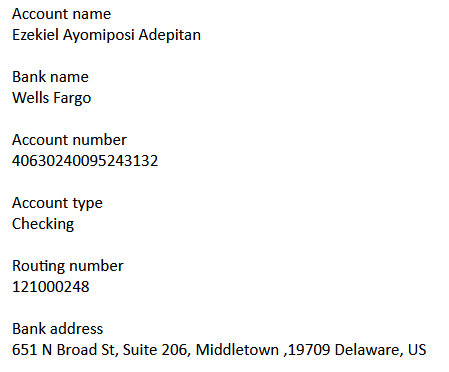
![Subject: Re:
Date: Fri,, 19 Feb 2026 12:03:47 +0100
From: Simon & Schuster LLC <simonschusterllc4@gmail.com>
To: Victoria Strauss [redacted]
Oloribu ni oo ni Victoria](https://writerbeware.blog/wp-content/uploads/2026/02/Simon-Schuster-impersonation-insult.png)