
I like watching movies.
239 stories
·
0 followers

Heathcliff for Jul 20, 2026

1 Share

Heathcliff for Jul 20, 2026

Updated: Mon Jul 20, 2026

Read the whole story
hostinger
5 days ago
reply
Japan
Share this story
Delete

You Say Tsuyu, I Say Baiu: How Japanese Jukujikun Make Kanji Even Harder

1 Share

If you’ve been studying Japanese for any length of time, you’ve probably had a moment where you looked at a familiar pair of kanji and thought, “Hey, I know how this is pronounced.” Except, then you find out the reading, and it’s not what you expected. At all.

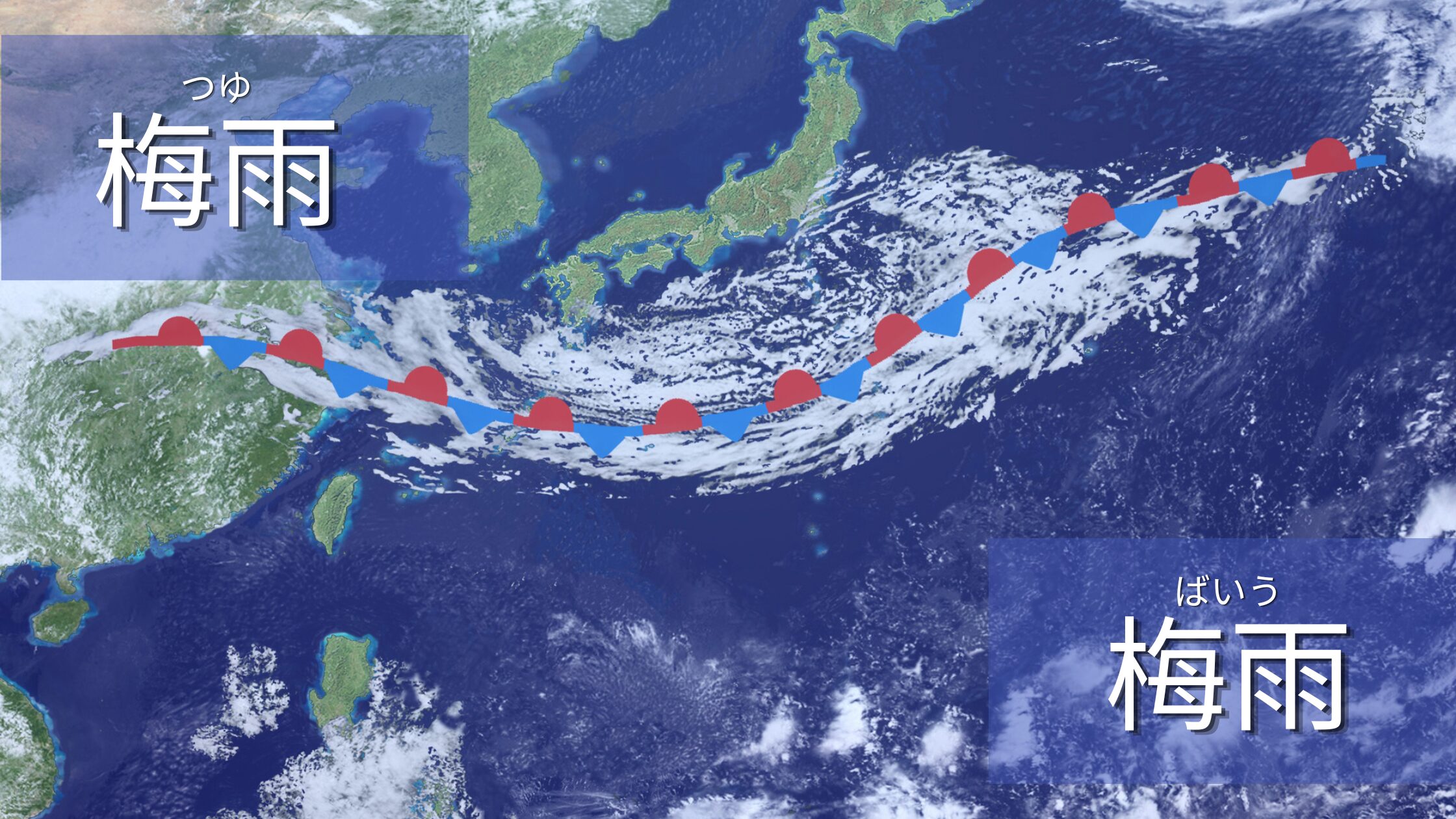
One recent viral post on social media had a picture-perfect example of this: 梅雨. Normally, you read it as tsuyu-ake (梅雨明け). But when you hear it on the news, it becomes baiu-zensen. And yet, as the post joked, it’s never “tsuyu-zensen.” So, why exactly is that?

The difference between tsuyu and baiu: casual speech vs. technical language

Tweet by @ArturGalata on the 梅雨 tsuyu vs baiu reading trap
Tweet by Latvia-based Japanese language personality @ArturGalata on the 梅雨 tsuyu vs baiu reading trap

In everyday conversation, you almost always pronounce 梅雨 as “tsuyu.” People talk about tsuyu-iri (梅雨入り), the beginning of the rainy season, and tsuyu-ake, when the season finally ends. These are the expressions you’ll hear in daily life, on the news, and in casual conversation. In other words, it’s a casual reading (much like the word “yabai!”).

But when the topic becomes more technical, the reading changes. Weather forecasters almost always use baiu in compounds like baiu-zensen (梅雨前線), referring to the stationary “rainy-season front” that brings weeks of cloudy skies and heavy rain. Another technical term is baiu-ki (梅雨期), meaning the “rainy period.”

To be clear, this isn’t a dialectal or regional difference, with eastern Japan saying one thing and western prefectures saying another. Rather, “tsuyu” belongs to everyday speech, while “baiu” belongs to meteorology and formal writing.

That’s why the original viral post pointed out that nobody says “tsuyu-zensen.” Once the weather forecast starts talking about fronts and atmospheric conditions, the reading automatically flips.

Special compound readings, and why tsuyu is such an outlier

Part of the reason it trips people up is that “tsuyu” doesn’t actually come from either individual kanji (梅 or 雨) at all. Instead, it’s an example of something called jukujikun (熟字訓). These refer to special readings assigned to compound words rather than separate kanji.

A lot of common Japanese words fall into this category. The word “today,” for example, uses two kanji that, separately, read as ima (今) and nichi (日). But together, they become kyō. The same goes for words like ashita (明日) for “tomorrow,” otona (大人) for “adult,” and samidare (五月雨) for “early-summer rain.”

In fact, these readings are so common that most learners will have encountered a bunch way before even hearing the word “jukujikun” or realizing they have a whole category.

It’s contrary to how most kanji are read, using either the Chinese-derived on’yomi or native kun’yomi readings. And unfortunately, there’s no easy trick to figuring out a jukujikun reading. You just have to memorize the special compound words.

Why is the literal translation of tsuyu “plum rain?” An etymological deep dive

A child writing kanji practice on a printed worksheet, pencil in hand, with a notebook and smartphone on a wooden desk
Picture: SoutaBank / PIXTA(ピクスタ)

Something else you may have noticed if you’ve studied Japanese is that, individually, the kanji for tsuyu mean “plum” and “rain.” Literally, “plum rain,” which doesn’t quite fit with the compound translation of “rainy season.”

One explanation is that the rainy season overlaps with the period when ume (梅), often translated as Japanese plums or apricots, ripen. According to this theory, writing the season as “plum rain” simply reflected that coincidence.

Another theory is more colorful. Some linguists believe the original word was actually written 黴雨, meaning “mold rain.” Since the rainy season is warm, humid, and perfect for mold growth, the name made sense. But humans are aesthetic creatures at heart, and calling it “mold rain” is hardly appealing. So, since mold (黴) and plum (梅) share the same pronunciation in Chinese-derived readings (bai), the unpleasant character was eventually replaced with the much nicer-looking 梅.

And that’s just the kanji. The origin of the native reading “tsuyu” is even less certain.

One theory links it to 露 (tsuyu), meaning “dew,” a reference to the moisture that covers everything during early summer. Another traces it to old verbs meaning “to decay” or “to rot,” referring to fruit ripening, clothes becoming damp, and food spoiling during the humid season.

Of course, no one really knows. Even the Japan Meteorological Agency notes that the true origin is a mystery.

Tsuyu across Asia, in all its pronunciations

Interestingly, while Japan, China, and Korea all experience the same East Asian rainy season, they don’t pronounce it anything alike.

China writes the same characters, 梅雨, but reads them as méiyǔ. The famous Meiyu front is the same weather system Japanese meteorologists call the baiu front.

Korea, meanwhile, doesn’t use the characters at all. Instead, the rainy season is simply called jangma, a native Korean word with an entirely different origin.

Maybe that shouldn’t be too much of a surprise, since these countries all have different languages. But since they’re relatively close together, you’d normally expect a few more similarities, much like the Romance languages (Italian, Spanish, French, etc.) have many similar words.

But, well, that’s just how it is. At the end of the day, tsuyu/baiu is just one of many quirks in the Japanese language. It captures both how fascinating and frustrating learning it can be.

Sources

「梅雨」は何で「つゆ」というの?(はれるんランド 天気のFAQ) 気象庁 (Japan Meteorological Agency) (archived)

梅雨前線(ばいうぜんせん)って何?(はれるんランド 天気のFAQ) 気象庁 (Japan Meteorological Agency)

梅雨/つゆ/ばいう 語源由来辞典

熟字訓 Wikipedia (日本語版)

梅雨 Wikipedia (日本語版)

「梅雨」の由来はカビ(黴)? 約40日間続く梅雨を快適に過ごすために知るべきこと 日本気象協会 tenki.jp

「熟字訓」って何だっけ? 特別な読み方についてまとめました ことばのエチュード


Read the whole story
hostinger
12 days ago
reply
Japan
Share this story
Delete

Heathcliff for Apr 21, 2026

1 Share

Heathcliff for Apr 21, 2026

Updated: Tue Apr 21, 2026

Read the whole story
hostinger
95 days ago
reply
Japan
Share this story
Delete

Why High Speed 2 and Other European Lines Make Fewer Stops than the Shinkansen

1 Share

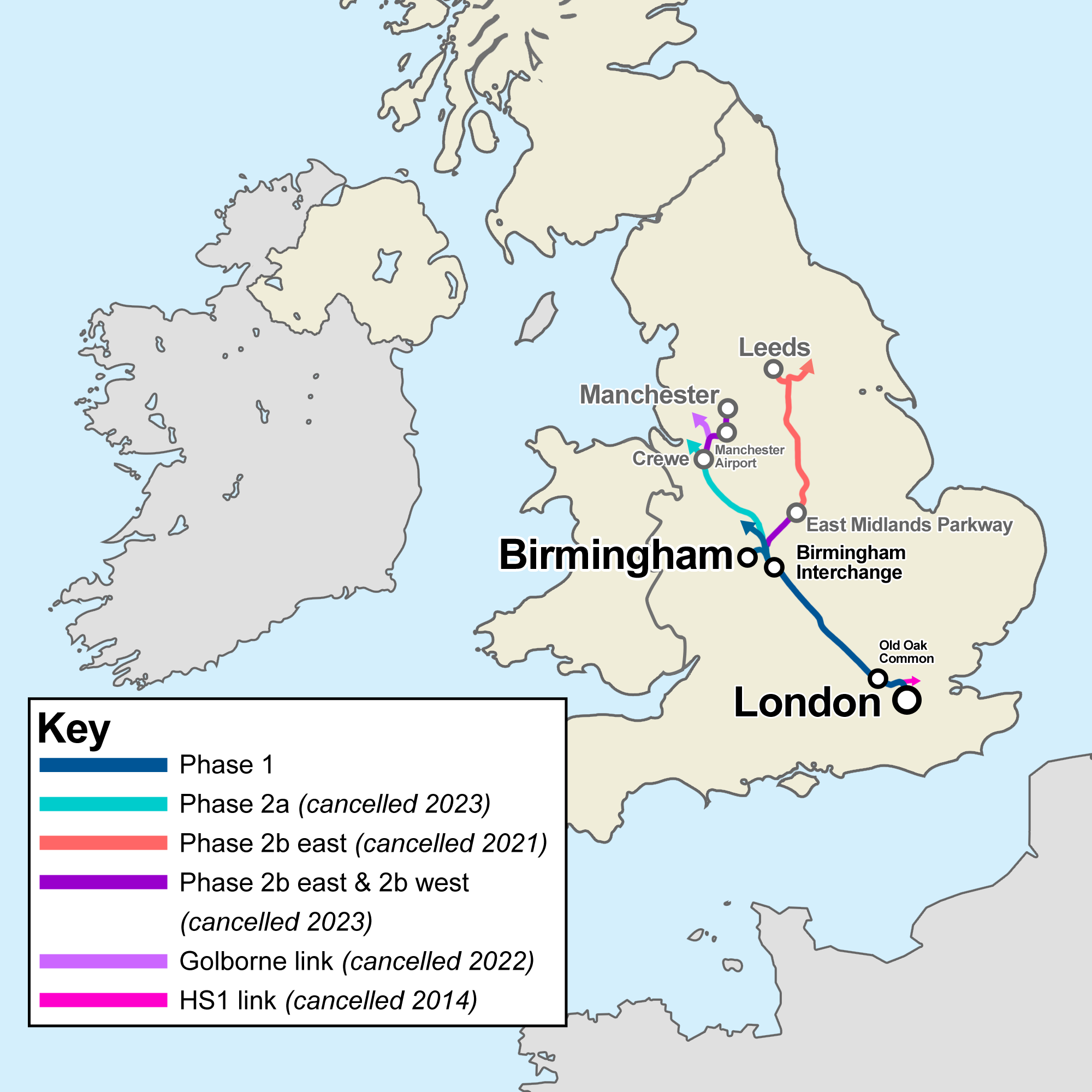
At a meeting last week, Borners was asking me why High Speed 2 is designed not to make any stops between London and Birmingham. This distance, about 150 km between Old Oak Common and Birmingham Interchange, would have around 4.5 interstations on the Shinkansen, but in the UK, it runs nonstop. More generally, in Europe similarly long stretches without stations are observed, but not in Japan. This post goes over why; it is not due to poor design on the part of either side, but rather a response to the respective geographies of the countries in question.

Speed classes on the rail network

Modern intercity rail networks have multiple speed classes, comprising not just separation between high-speed trains and trains on the classical lines but also local and express trains on the same line, often the same track. Here, it is useful to go over the difference between Japan and Europe in general and Britain in particular.

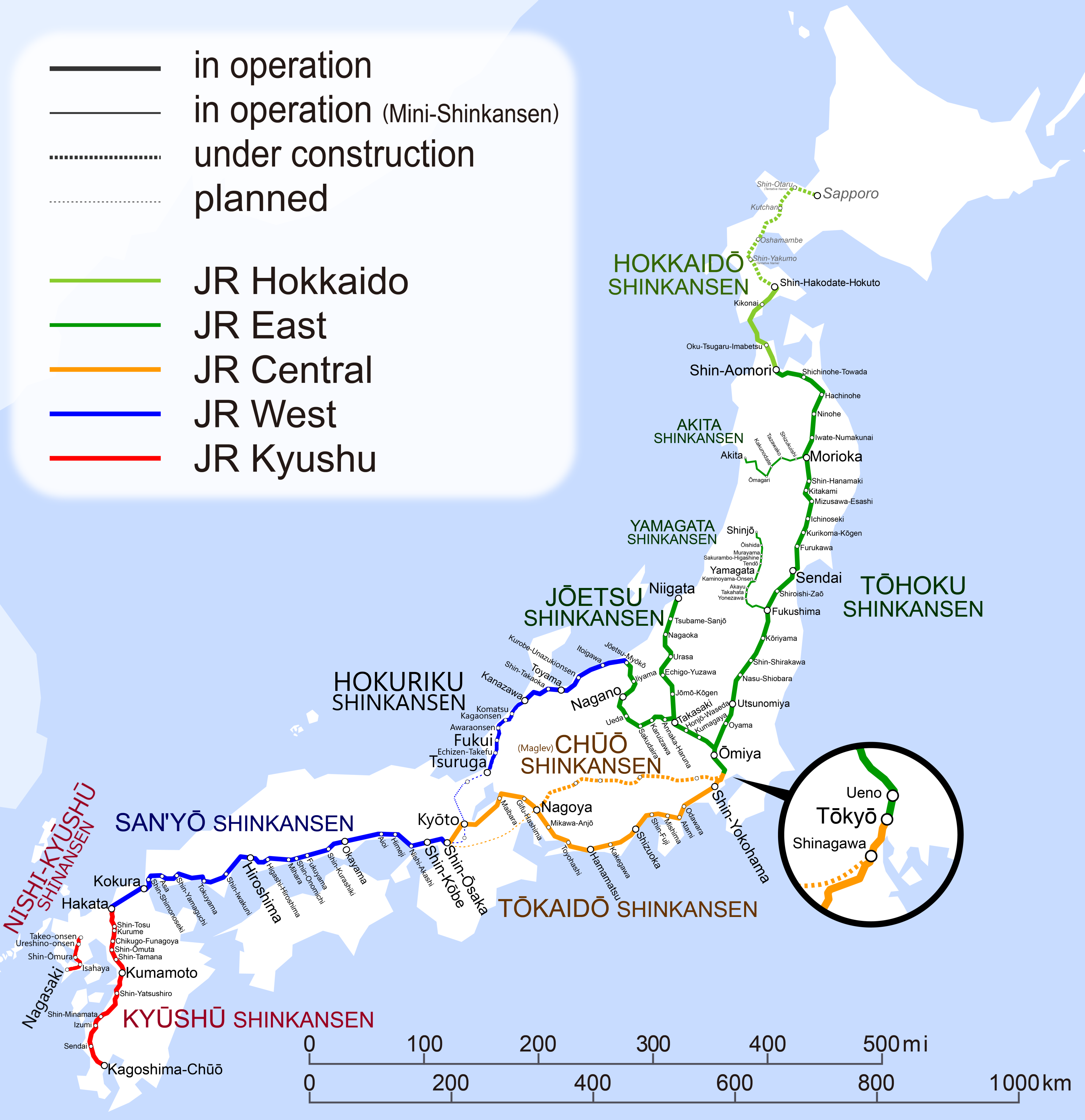
On the Tokaido Shinkansen, the fastest trains, stopping only in Tokyo and its immediate suburbs, then Nagoya, then Kyoto, and then Shin-Osaka are called Nozomi and average 210 km/h end-to-end; trains making additional stops are called Hikari and average 178 km/h; trains making all Shinkansen stops are called Kodama and average 132 km/h. Below that class are limited express trains on the narrow-gauge network, all much slower. The original Kodama, inaugurated in 1958 just before the Shinkansen began construction, did the Tokyo-Osaka trip at an average speed of 80 km/h. The fastest trains on classical lines in Japan average around 100-110 km/h, on lines without Shinkansen, while lines parallel to Shinkansen, such as the Tokaido Main Line, are slower as they prioritize regional traffic at an average speed of 60 km/h or so.

Britain, in contrast with Japan, has rather fast trains on its classical network, as do other countries that chose to invest in upgrading their existing network rather than in building high-speed rail on it. The intercity trains today connect London with the major cities of the Midlands and North at average speeds of about 130 km/h, depending on city and line. The West Coast and East Coast Main Lines are both straight, built in the 1830s and 40s when it wasn’t clear trains could even round significant curves without derailing, in one of Europe’s flattest geographies, the exact opposite of Japan with its mountainous terrain and narrow-gauge lines. Both lines were four-tracked in the 19th century, more or less allowing fast intercity trains to run alongside slower regional lines without interference. In effect, trains offering Kodama speeds are available in Britain today.

Germany is in a similar situation to Britain. The topography here is hillier and the lines built slightly later, after engineers figured out that sharp curves were fine at the speeds of mid-19th century steam trains, but it’s possible to squeeze decent speed out of some of them, especially in flatter northern Germany. Berlin-Hamburg, exceptionally, averages around 160 km/h entirely on classical track, with timetabled overtakes between intercity and regional trains and extensive schedule padding to allow for recovery from cascading delays. Other lines average 120-130 km/h, for example to Leipzig and Cologne, so that Kodama speeds are already available, again, and the focus when high-speed rail is built is on the Hikari/Nozomi speed range.

Finally, France, like Japan and unlike Britain and Germany, chose to invest in high-speed rail more than to upgrade its classical lines. But it, too, already had high speeds on its classical lines: from Paris to Marseille and Nice, trains averaged 120 km/h before the TGV opened. Short-range intermediate cities like Dijon already had fairly good service available, so serving them was less important than maximizing the speed of longer-range connections like Paris-Lyon and Paris-Marseille.

The urban geography of Japan, were it in Europe, would thus be serviceable on classical lines. In contrast, the lower speed of classical trains in Japan means that exurban centers like Odawara, Mishima, Utsunomiya, and Takasaki greatly benefit from having local Shinkansen trains available. England is denser than Japan; there are places at similar range from London on or near the main lines, such as Milton Keynes and Northampton, but they already have fairly fast trains to the capital, and will have even faster trains when High Speed 2 opens even though they don’t get stations, because the removal of the intercity trains from the West Coast Main Line will allow for schedule rewrites reducing timetable padding and allowing for faster trip times between London and such intermediate points, which today are lower priorities than higher average speeds to Birmingham and points north.

City size and prioritization

On the one hand, as outlined above, there is less need for Kodama-speed service to intermediate cities in Europe than there is in Japan. On the other hand, regardless of need, such service must take lower priority in Europe, due to differences in urban geography.

In Japan, the Tokaido Shinkansen prioritizes Tokyo-Nagoya-Kyoto-Osaka traffic, as those cities outshine all others. Kodama trains could do the trip significantly faster than they do today, but are held at local stations to let Nozomi pass, and most trains are Nozomi rather than Hikari or Kodama. However, north of Tokyo, the situation flips. There is extensive commuter traffic, seen in much shorter average trips than on the Tokaido Shinkansen. The northern exurbs of Tokyo furnish extensive traffic, while the cities beyond commute range are too small to drive traffic all by themselves.

In the Tohoku region, by far the largest major metropolitan area is Sendai, population 2.3 million. The only other major metropolitan area served by the Tohoku or Joetsu Shinkansen, Niigata, has 1.4 million. The other cities don’t qualify as MMAs; the largest, Toyama on the Hokuriku Shinkansen, has an urban employment area of 1 million, while the others, such as Fukushima, Morioka, and Nagano, have around 500,000 each. Utsunomiya and the Takasaki-Maebashi region have 1.3 and 1.1 million respectively, enough that their needs should drive service planning as much as those of the cities to their north.

Britain is the exact opposite. Its metro area listings are somewhat outdated – I can only find 2001 data, compared with 2015 for Japan in the above paragraph – but we can compute based on metropolitan counties, designed to approximate metropolitan areas for the major secondary cities of England. Birmingham’s West Midlands and Greater Manchester are 3 million each, Leeds’ West Yorkshire is 2.4 million, Liverpool’s Merseyside is 1.5 million; at longer range, counting cities to be served on long extensions on classical lines at lower speed, Newcastle’s Tyne and Wear is 1.2 million, Edinburgh is 900,000, and Glasgow is depending on definitions between 1 and 1.8 million. In contrast with those, there is nothing that populous justifying its own station between London and Birmingham. Milton Keynes is too small, and an exurban station at the intersection with the under construction East West Rail between Oxford and Cambridge would not provide much added benefit over the existing direct express trains from Oxford and Cambridge to London.

The British situation generalizes. In Germany, not only does every line have quite a number of midsize cities at its end and beyond it, but also no city is so large that it sprouts subsidiary metro areas the size of Utsunomiya and Maebashi. When intermediate stops are built on high-speed lines, such as Montabaur on the Cologne-Frankfurt line, they are weak, and serve mostly for political purposes to defray NIMBYism; two such political stations are likewise included in the Hanover-Hamburg line. Even then, with stations that raise construction costs and compromise the alignment and timetable for no good technical reason, the stop spacing on these lines is wider than on the Shinkansen, which speaks to the difference in geography between Europe and Japan.


Read the whole story
hostinger
109 days ago
reply
Japan
Share this story
Delete

Heathcliff for Apr 03, 2026

1 Share

Heathcliff for Apr 03, 2026

Updated: Fri Apr 03, 2026

Read the whole story
hostinger
113 days ago
reply
Japan
Share this story
Delete

Supreme Court Rules for Cox, Weakens DMCA

1 Share
The Supreme Court ruled in favor of Cox in its long-running lawsuit with the music industry. More than a win for the ISP, the decision could reshape the DMCA.

Source

Read the whole story
hostinger
122 days ago
reply
Japan
Share this story
Delete
Next Page of Stories