
I like watching movies.
236 stories
·
0 followers

Why High Speed 2 and Other European Lines Make Fewer Stops than the Shinkansen

1 Share

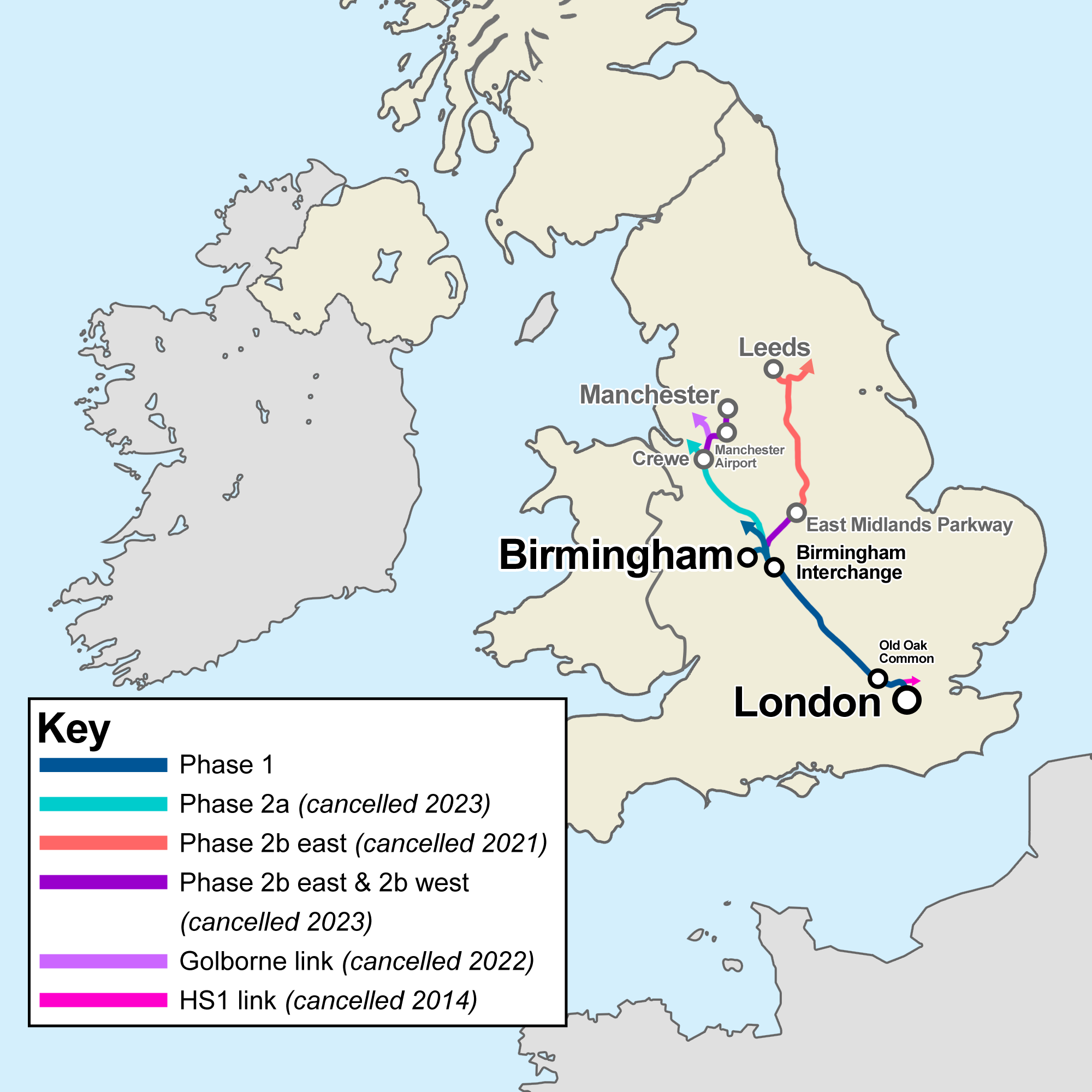
At a meeting last week, Borners was asking me why High Speed 2 is designed not to make any stops between London and Birmingham. This distance, about 150 km between Old Oak Common and Birmingham Interchange, would have around 4.5 interstations on the Shinkansen, but in the UK, it runs nonstop. More generally, in Europe similarly long stretches without stations are observed, but not in Japan. This post goes over why; it is not due to poor design on the part of either side, but rather a response to the respective geographies of the countries in question.

Speed classes on the rail network

Modern intercity rail networks have multiple speed classes, comprising not just separation between high-speed trains and trains on the classical lines but also local and express trains on the same line, often the same track. Here, it is useful to go over the difference between Japan and Europe in general and Britain in particular.

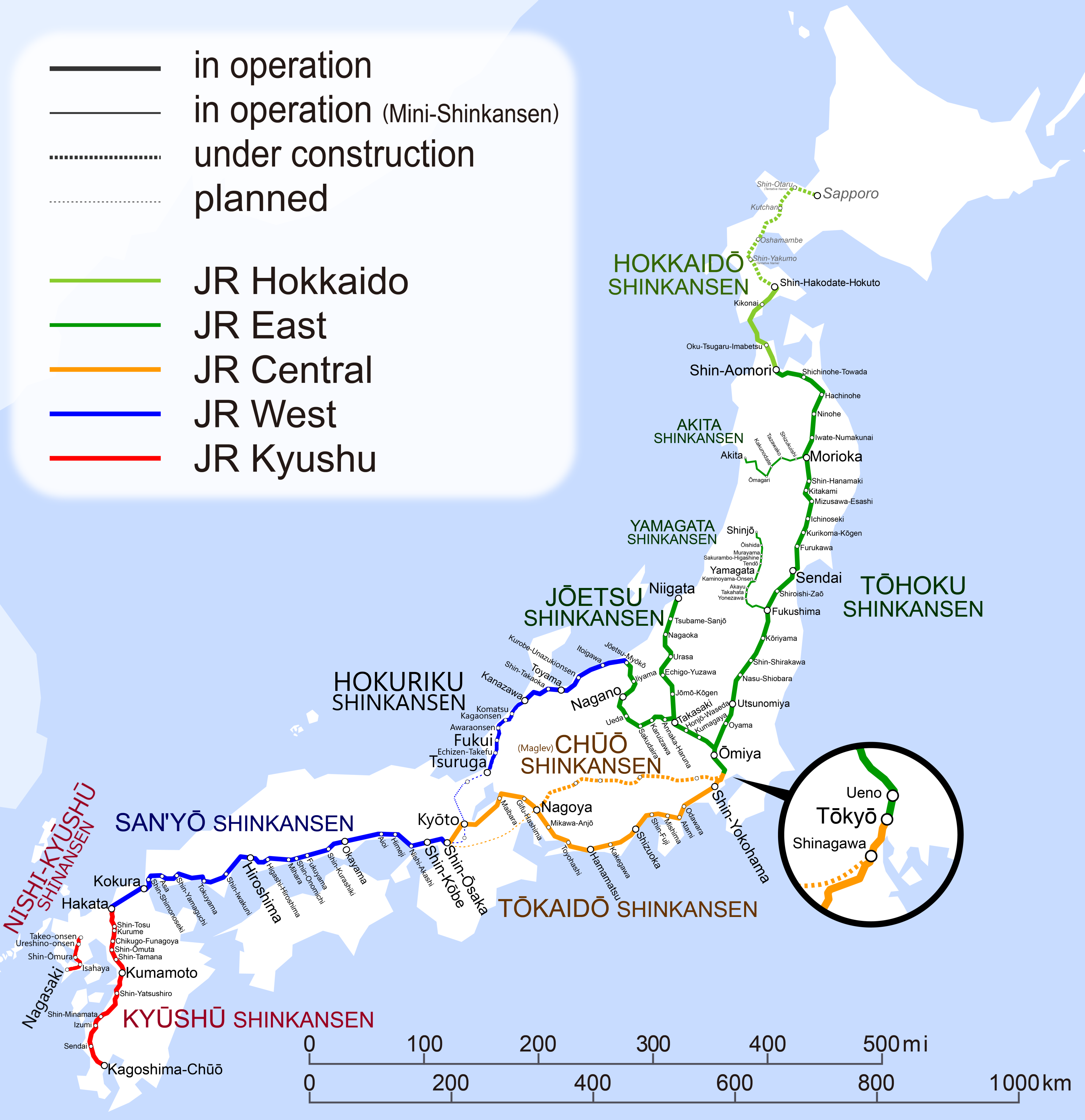
On the Tokaido Shinkansen, the fastest trains, stopping only in Tokyo and its immediate suburbs, then Nagoya, then Kyoto, and then Shin-Osaka are called Nozomi and average 210 km/h end-to-end; trains making additional stops are called Hikari and average 178 km/h; trains making all Shinkansen stops are called Kodama and average 132 km/h. Below that class are limited express trains on the narrow-gauge network, all much slower. The original Kodama, inaugurated in 1958 just before the Shinkansen began construction, did the Tokyo-Osaka trip at an average speed of 80 km/h. The fastest trains on classical lines in Japan average around 100-110 km/h, on lines without Shinkansen, while lines parallel to Shinkansen, such as the Tokaido Main Line, are slower as they prioritize regional traffic at an average speed of 60 km/h or so.

Britain, in contrast with Japan, has rather fast trains on its classical network, as do other countries that chose to invest in upgrading their existing network rather than in building high-speed rail on it. The intercity trains today connect London with the major cities of the Midlands and North at average speeds of about 130 km/h, depending on city and line. The West Coast and East Coast Main Lines are both straight, built in the 1830s and 40s when it wasn’t clear trains could even round significant curves without derailing, in one of Europe’s flattest geographies, the exact opposite of Japan with its mountainous terrain and narrow-gauge lines. Both lines were four-tracked in the 19th century, more or less allowing fast intercity trains to run alongside slower regional lines without interference. In effect, trains offering Kodama speeds are available in Britain today.

Germany is in a similar situation to Britain. The topography here is hillier and the lines built slightly later, after engineers figured out that sharp curves were fine at the speeds of mid-19th century steam trains, but it’s possible to squeeze decent speed out of some of them, especially in flatter northern Germany. Berlin-Hamburg, exceptionally, averages around 160 km/h entirely on classical track, with timetabled overtakes between intercity and regional trains and extensive schedule padding to allow for recovery from cascading delays. Other lines average 120-130 km/h, for example to Leipzig and Cologne, so that Kodama speeds are already available, again, and the focus when high-speed rail is built is on the Hikari/Nozomi speed range.

Finally, France, like Japan and unlike Britain and Germany, chose to invest in high-speed rail more than to upgrade its classical lines. But it, too, already had high speeds on its classical lines: from Paris to Marseille and Nice, trains averaged 120 km/h before the TGV opened. Short-range intermediate cities like Dijon already had fairly good service available, so serving them was less important than maximizing the speed of longer-range connections like Paris-Lyon and Paris-Marseille.

The urban geography of Japan, were it in Europe, would thus be serviceable on classical lines. In contrast, the lower speed of classical trains in Japan means that exurban centers like Odawara, Mishima, Utsunomiya, and Takasaki greatly benefit from having local Shinkansen trains available. England is denser than Japan; there are places at similar range from London on or near the main lines, such as Milton Keynes and Northampton, but they already have fairly fast trains to the capital, and will have even faster trains when High Speed 2 opens even though they don’t get stations, because the removal of the intercity trains from the West Coast Main Line will allow for schedule rewrites reducing timetable padding and allowing for faster trip times between London and such intermediate points, which today are lower priorities than higher average speeds to Birmingham and points north.

City size and prioritization

On the one hand, as outlined above, there is less need for Kodama-speed service to intermediate cities in Europe than there is in Japan. On the other hand, regardless of need, such service must take lower priority in Europe, due to differences in urban geography.

In Japan, the Tokaido Shinkansen prioritizes Tokyo-Nagoya-Kyoto-Osaka traffic, as those cities outshine all others. Kodama trains could do the trip significantly faster than they do today, but are held at local stations to let Nozomi pass, and most trains are Nozomi rather than Hikari or Kodama. However, north of Tokyo, the situation flips. There is extensive commuter traffic, seen in much shorter average trips than on the Tokaido Shinkansen. The northern exurbs of Tokyo furnish extensive traffic, while the cities beyond commute range are too small to drive traffic all by themselves.

In the Tohoku region, by far the largest major metropolitan area is Sendai, population 2.3 million. The only other major metropolitan area served by the Tohoku or Joetsu Shinkansen, Niigata, has 1.4 million. The other cities don’t qualify as MMAs; the largest, Toyama on the Hokuriku Shinkansen, has an urban employment area of 1 million, while the others, such as Fukushima, Morioka, and Nagano, have around 500,000 each. Utsunomiya and the Takasaki-Maebashi region have 1.3 and 1.1 million respectively, enough that their needs should drive service planning as much as those of the cities to their north.

Britain is the exact opposite. Its metro area listings are somewhat outdated – I can only find 2001 data, compared with 2015 for Japan in the above paragraph – but we can compute based on metropolitan counties, designed to approximate metropolitan areas for the major secondary cities of England. Birmingham’s West Midlands and Greater Manchester are 3 million each, Leeds’ West Yorkshire is 2.4 million, Liverpool’s Merseyside is 1.5 million; at longer range, counting cities to be served on long extensions on classical lines at lower speed, Newcastle’s Tyne and Wear is 1.2 million, Edinburgh is 900,000, and Glasgow is depending on definitions between 1 and 1.8 million. In contrast with those, there is nothing that populous justifying its own station between London and Birmingham. Milton Keynes is too small, and an exurban station at the intersection with the under construction East West Rail between Oxford and Cambridge would not provide much added benefit over the existing direct express trains from Oxford and Cambridge to London.

The British situation generalizes. In Germany, not only does every line have quite a number of midsize cities at its end and beyond it, but also no city is so large that it sprouts subsidiary metro areas the size of Utsunomiya and Maebashi. When intermediate stops are built on high-speed lines, such as Montabaur on the Cologne-Frankfurt line, they are weak, and serve mostly for political purposes to defray NIMBYism; two such political stations are likewise included in the Hanover-Hamburg line. Even then, with stations that raise construction costs and compromise the alignment and timetable for no good technical reason, the stop spacing on these lines is wider than on the Shinkansen, which speaks to the difference in geography between Europe and Japan.


Read the whole story
hostinger
6 days ago
reply
Japan
Share this story
Delete

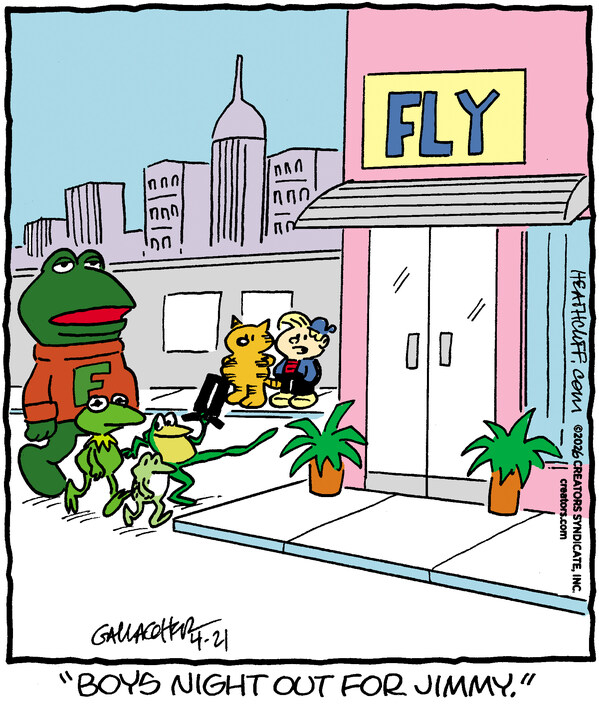
Heathcliff for Apr 03, 2026

1 Share

Heathcliff for Apr 03, 2026

Updated: Fri Apr 03, 2026

Read the whole story
hostinger
10 days ago
reply
Japan
Share this story
Delete

Supreme Court Rules for Cox, Weakens DMCA

1 Share
The Supreme Court ruled in favor of Cox in its long-running lawsuit with the music industry. More than a win for the ISP, the decision could reshape the DMCA.

Source

Read the whole story
hostinger
18 days ago
reply
Japan
Share this story
Delete

Who Put the ‘Kong’ in ‘Donkey Kong’?

1 Share

You might know how Donkey Kong got his first name. You might even think you know the real answer. But have you ever thought about how he got that last name?

It doesn’t take much movie knowledge to guess where it comes from, but maybe a more interesting question is how anyone conjured that syllable into existence in the first place. I will tell you, but to get there we need to take a tour of Donkey Kong history, examining the lore you think you know to reveal that the popular telling of it might not actually have all its facts straight.


At this point, the community of weirdos that works to figure out where things in video games come from should feel proud for more or less closing the case regarding Donkey Kong’s first name. For years, this matter seemed impossibly mysterious to the general public. And as a result, multiple urban legends attempted to explain how the most famous simian in video games ended up with a literally asinine name.

The most widespread folk etymology for Donkey Kong’s name seems to be the one addressed on its Snopes page: that it was a translation error, and that the character’s name was meant to be Monkey Kong. The version I recall hearing was a little more specific than someone intending one English animal name and then picking another, however; it was that Monkey became Donkey not as a result of human error but from a smudged fax. Though that version was almost assuredly circulating long beforehand, the oldest record I can find seems to be a December 23, 1991, article in The Daily Telegraph about the of Super Mario Land for the Game Boy being the hot item for that Christmas season in the United Kingdom. It cites a Mark Smith of a Nintendo Club magazine as explaining Donkey Kong’s name as a result of a misprinting fax machine, but make of that what you will, because the piece goes on to make at least two errors in the following paragraph.

See how many you can count!


Both these mistranslation stories are technically plausible, I guess, and Japanese companies have come up with brand names that sound even stranger to English-speakers. (The Snopes piece cites Pocari Sweat, and I personally would suggest the Adult Cream Pie menu item that materialized at Japanese McDonald’s restaurants.) However, I think believing either one requires a bit of mean-spirited humor at the idea of a foreign person trying and failing to speak English properly. That particular flavor of xenophobia was likely enhanced by western by suspicion of Japan and its then-booming tech industry, of which Donkey Kong was certainly part. 

What’s especially wild about the belief that Donkey Kong could have only gotten his name as a result of error on the part of his Japanese creators is that it persisted long after we got the real story. It just didn’t come immediately to mainstream attention. So far on this blog, I have brought up David Sheff’s 1993 book Game Over almost specifically for it having propagated the Pac-Man hockey puck myth. It actually asserts a few things that have since been revealed to be untrue, but I have to give credit where credit is due, because Game Over is one of the first places to state that Shigeru Miyamoto picked that first name to give Donkey Kong a specific personality. As far as I know, this may be the first source in the public record to state that Donkey Kong was named intentionally, not as a result of a mistake of a Japanese person having a loose grip on English.


I’m not sure about the quality of a Japanese-English translation dictionary that would say that donkey means “stupid” or “goofy.” And as far as I know, I don’t think anyone has ever produced said dictionary, showing that the word donkey meant either thing in English. But Miyamoto has stuck with this story in other interviews — and that is notable, because he does not always give the same origins when recalling how he created his various video game characters.

For example, Miyamoto said basically the same thing in a Japan-only Nintendo.com interview from 2000. There happens to be a translation posted by The Mushroom Kingdom, and I’m just going to use that here.

I had always been under the impression that kong meant “gorilla.” So I wanted to name him “something-something” Kong. And so, because I wanted to make a dumb character, I went and looked that word up in an English dictionary. When I did that, I found that the word donkey had that meaning in addition to that of the animal. And so with that, I gave him the name Donkey Kong, but when we brought him to America, it was said over and over, “That’s a weird name. Donkey doesn’t mean dumb.” But I was just like, “Well, whatever,” and left the name that way. Even after all that, Donkey Kong is still loved all over America, right? I think that when something is called weird, there’s a strong negative connotation to it, but on the other hand, by leaving it that way I think it definitely sticks in people’s minds better.

And then there’s a 2016 Nintendo.com interview with Miyamoto in which he basically offers a version of what’s in Sheff’s book, just more plausible-seeming or less inaccurate-seeming, depending on your perspective. That interview is also in Japanese, but Chris Kohler translated it for a post on Wired.com, and I’ll just use that translation.

“At that time, while I was making Donkey Kong, the conversations were all around how ‘globalism is important’ and ‘we should think worldwide,’” he said. “We listened to a lot of Nintendo of America's opinions, but not all of them.”

“For example, for the game’s title, I was trying to convey the idea of ‘stupid monkey,’” he said. “Donkey of course referred to the animal, but the dictionary I used said that it had a secondary meaning of ‘idiot.’ Nintendo of America said that this was not the case, and donkey didn’t mean ‘idiot.’”

“Even though it was in the dictionary,” the interviewer said.

“It’s a mystery,” Miyamoto replied. “But I just liked the sound of it, so I decided to stand my ground on Donkey Kong. And within a year, everyone was saying Donkey Kong with no hesitation.”

So yeah, despite the fact that urban legends spread quickly and without regard for critical thinking, this is one case in which they seem to have lost traction as a result of a more accurate narrative getting out. I don’t know whether to credit Miyamoto, David Sheff or know-it-all video game nerds who tell people “Yeah, it’s actually *not* a translation error” for this, but at the very least, the urban legends are not the only explanations floating around out there if someone puts “donkey kong name origin” in a search engine.

But what if this newer, more accurate narrative is not the real story?

There is a credible claim that Shigeru Miyamoto is not the person who came up with Donkey Kong’s name, despite how he might recall it in interviews. According to the Gaming Historian (a.k.a. Norm Caruso), who in 2020 reviewed the papers related to Universal Studio’s 1983 lawsuit against Nintendo on grounds that Donkey Kong infringed on its trademark on King Kong, the name was actually coined by Shinichi Todori, who worked for the company as an export manager and therefore had an eye and ear for how game titles would be received in non-Japanese markets. The original post has since gone viral in a way that skipped over this particular point, but it was Caruso who first brought to any kind of mainstream awareness that the documents credit Todori and not Miyamoto. 


Via Norm Caruso on Twitter.


In general, the internet seemed more tickled with the list of name alternatives Todori also came up with: Funny Kong, Kong the Kong, Jack Kong, Funky Kong, Bill Kong, Steal Kong, Giant Kong, Big Kong, Kong Down, Kong Dong, Mr. Kong, Custom Kong, Ultra Kong, Kong Chase, Kong Boy, Kong Man, Kong Fighter, Wild Kong, Rookie Kong and Kong Holiday. I get it. Yes, it is very funny that the name Donkey Dong ever came up in a legal context. And yes, it is perhaps notable that Rare would later reuse the name Funky Kong, though I’m guessing it’s a coincidence.

What strikes me most about the document glimpsed in Caruso’s tweet is the concluding sentence in the previous paragraph: “To Mr. Miyamoto, kong means a gorilla since the popular name for a gorilla in Japan is kong.” There are a few ways to interpret this sentence. What I’d guess it means is that even if Miyamoto did not come up with the name Donkey Kong outright, then he at least was on record saying that he felt Kong should be part of it because of the associations he thought it had. That’s relevant for this post later on, but I should also point out that in his video on the origin of various Super Mario character names, Caruso says that the lawsuit documents point to Miyamoto’s boss at the time, Gunpei Yokoi, as being the one who gave Todori instructions for coming up with a name for what had previously gone by the working title Table Kong Game.


The Donkey Kong section begins at 12:31, but the whole video is worth watching.


As it’s explained in Caruso’s video, it was Yokoi, not Miyamoto, who thought that kong meant or at least signified “gorilla.” But since the two were working closely together on the game, I suppose one could have easily told the other that this was the case and both could have ended up with this idea in their heads. We don’t know which of them came up with the working title Table Kong Game, but clearly it had been important enough almost from the beginning — or at least shortly after Popeye and Olive Oyl were removed from it.

Furthermore, Todori’s deposition offers yet another version of consulting this mythical Japanese-to-English dictionary. As he recalled it to the lawyers, he was looking for a Japanese equivalent of the word とんま or tonma, meaning “fool,” and ended up at donkey. This seems a little more plausible than Miyamoto’s claim of a dictionary giving him the wrong definition for donkey. If Todori was looking for an English synonym for fool, he could have easily found ass or jackass and then ended up at donkey. Per Caruso’s video, the final decision on the matter came down to either Yokoi or then-president Hiroshi Yamauchi; Todori doesn’t recall consulting or being consulted by Miyamoto at all in coming up with the name.


While the first part of Donkey Kong’s name is historically the one that has gotten all the attention, this particular blog post is actually focused on the second part of his name. As Miyamoto remembers it, at least, the esteemed surname Kong was so central to the equation that it was always a given that it would be part of the character’s name — and the game’s name by extension. 

Even though I basically knew the answer, the impetus for this post was actually just looking into the etymology of Kong. But surprise! The answer is more complicated than I initially expected, and if you follow me down this path, you just might learn something about the reciprocal way video games interact with the larger sphere of popular culture.

Obviously, Donkey Kong’s last name comes from King Kong, the original 1933 movie released by RKO Radio Pictures. It seems weird to explain King Kong this far into the post, but in case you somehow don’t know, it’s a landmark monster movie about a giant ape who runs amok in New York City, ultimately abducting a lady and taking her to the top of the Empire State Building. The film is considered a success by all standards; not only did it make money, but also it spawned sequels, remakes and imitators, and it even helped give rise to Godzilla and the kaiju movie subgenre in Japan. It’s a big deal, you could say, and in fact, I struggle to think of many other films that have impacted pop culture as greatly as King Kong has.

Whole books have been dedicated to telling the story of the 1933 movie’s production. For the purposes of this post, however, it’s notable that one of its two directors, Merian C. Cooper, was so charmed with the 1927 travelogue The Dragon Lizards of Komodo by W. Douglas Burden that he began to dream of making a movie that depicted a gargantuan gorilla battling a large lizard. That movie would of course become King Kong, which does in fact depict the titular beast battling a Tyrannosaurus on his native Skull Island. 


According to Mark Cotta Vaz’s 2005 biography of Cooper, the director thought hard “K” sounds in names like Kodiak, Komodo and Congo conveyed the energy he wanted in his film and in its central brute. In a letter Burden wrote to Cooper in 1964, he recalled the creation of King Kong’s name as he remembered it.

I remember, for example, that you were quite intrigued by my description of prehistoric Komodo Island and the dragon lizards that inhabited it. … You especially liked the strength of the words beginning with ‘K.’ It was then, I believe, that you came up with the idea of Kong as a possible title for a gorilla picture. I told you that I liked very much the ring of the word… and I believe that it was the combination of the “King of Komodo” phrase in my book and your invention of the name Kong that led you to the title you used much later on, King Kong.

The facts are stated slightly differently elsewhere, including the 1975 book The Making of King Kong, which credits RKO head David O. Selznick with finalizing the title after a previous version of the script was merely titled Kong. Regardless of which version you chose to believe, they all more or less say that the name Kong wouldn’t appear to mean anything in particular. It was invented — by Cooper, it seems — to convey a sense of exotic mystery but also geographic vagueness. And to that end, it would seem to have been enormously successful both on its own and by extension through Donkey Kong as well.

In the west, King Kong more or less never left public consciousness, and people who have never seen any of the movies would likely still know that he is a giant gorilla, kind of in the same way people just know who Dracula and Frankenstein are. That’s probably true in Japan as well, but the character and the name took on a slightly different life after the original film screened in Japanese theaters. For example, two silent films, both considered lost now, attempted to put a Japanese spin on what had been an American story. In 1952, the 1933 original was re-released in Japan by Daiei Film, which would later produce Gamera in 1965; it was one of the first American films to play in Japanese theaters following World War II. And of course the third Godzilla movie was King Kong vs. Godzilla (キングコング対ゴジラ), and it would have opened in theaters in 1962, when a young Shigeru Miyamoto would have been the exact right age to have pop culture leave an indelible imprint on him, even if he’d known beforehand who King Kong was.

I couldn’t find any interview in which Miyamoto says exactly how he first experienced King Kong, but in many of his recollections about the creation of Donkey Kong, he reveals a specific way in which the character of King Kong seems to have impacted him. For a period of time, at least, he seems to have thought that the term kong meant “gorilla,” either in Japanese or in English or both. Of course, it doesn’t mean that — not really, in the sense that you’d ever find it in a dictionary defined that way. But I can see how someone who did not speak English well might get the idea that the title King Kong is calling the gorilla in question the king of all the kongs, not unlike how the Super Mario series King Boo is the leader of all the ghosts. I could even see how someone might assume that as a result of King Kong, コング or kongu functions as a loanword in Japanese — as a shorthand for all gorillas or all large simians or even all simians.

Unfortunately, none of these seem to be the case. I talked to Fatimah and asked my various Japanese-fluent friends if they’d ever come across kongu being used this way. No one could recall hearing or reading this. This is not to say that Shigeru Miyamoto is the only person in all of Japan who might think this and that he just happened to crystallize his misunderstanding in one of the best-known video game brands of all time — although it would be really funny if this were the case. No, other Japanese-speakers have made this mistake as well, including this person on Twitter, this person on Quora and this person on Yahoo Answers. It just doesn’t seem especially widespread. For all I know, it could be a generational thing, and Miyamoto is the most famous member of his cohort to admit to ever thinking this.

It’s entirely possible that there are likely people who only think this *because of* Shigeru Miyamoto having said so in interviews. That’s certainly the case with the below tweet.


No, it isn’t.


But even if kong never entered Japanese in the way Miyamoto seemed to think, as a generic noun free from its associations with the movie King Kong, there are some senses in which it did disconnect, even if it remained a proper noun. For one thing, predating even King Kong is the 1932 ethnographic documentary Congorilla. Despite what the title and poster might imply, it’s more remembered today for its depiction of a pygmy tribe living in the Congo Basin, though it does also feature gorillas.


The film seems to have been released at some point in Japan with the title コンゴリラ (Kongorira), but I’m not sure when. In either English or Japanese, it at the very least implies that kong has some association with gorillas, even if the title is referring to the African nation, which King Kong apparently is not.  

More recently, King Kong’s name has also become associated with professional wrestlers who might be known to Japanese fans of the sport. King Kong Bundy (real name: Christopher Alan Paris), for example, began his career in the U.S. in 1980 but shortly began wrestling in Japan as well. Born in Japan to a Japanese mother and an African-American father, Aja Kong (real name: Erika Shishido), began her career in Japan in 1986 and went on to compete in the U.S. Another female wrestler, The Amazing Kong (real name: Kia Stevens) began her career in the U.S. before competing in Japan. And then there’s Goya Kong (real name: Gloria Alvarado Nava), who began her career in Mexico before moving on to compete in both the U.S. and Japan.

In combination with the DJ Kamasami Kong, American-born but who achieved enough fame in 1980s Japan that he ultimately relocated there, this trend does suggest some awareness in Japanese culture of the name being used independently of either King Kong or Donkey Kong, though clearly in each case it’s meant to connect the person using it to qualities associated with one, the other or both. I feel like it’s too big a stretch to point to this as evidence of the kind of usage Miyamoto was claiming in interviews, but it’s as close as anything I could find. 

What a wild way to find out you were using a word wrong for decades. If the original 1981 Donkey Kong hadn’t ended up becoming such a success, he might not have ever known.

… Surely someone has told him by now, right?


To answer the question posed in this post’s title directly, Kong comes from King Kong, which essentially anyone could have guessed without researching any of this. Entirely new to me, however, is the idea that Kong was created specifically for King Kong, not meaning any one thing in particular but aiming to evoke a certain sort of gentleman adventurer’s sense of the wild world. It’s strong. It’s dangerous. And while it’s not tied to any real-world geography, exactly, it’s very much aiming to create a sense of the exotic; wherever you are, it’s from some other place that’s strange and unknown.

If the aim of this piece were to just share the etymology of Kong, it literally could have been done in a single sentence, I realize. I wrote all this out because I was intrigued by the unlikely way that Donkey Kong inherited some of the mystery that Merian C. Cooper strove for when he named his giant ape nearly a century ago. I mean, Donkey Kong for sure embodies King Kong’s brawn and his tendency to kidnap ladies. But because someone at Nintendo — allegedly Shigeru Miyamoto but probably Shinichi Todori — gave Donkey Kong a puzzling name, the character also ended up embodying that sense of the exotic that defies geography. 

In short, Donkey Kong doesn’t really sound like he’s from anywhere. 

To the average Japanese arcade-goer back in the day, Donkey Kong’s name would have sounded distinctly western. But if anyone attempted to figure out what his name meant by looking up the components in a Japanese-English translation dictionary, I’m pretty sure they’d be left confused. To the average American arcade-goer, Donkey Kong’s name sounded distinctly like a translation fail — obviously foreign if not Japanese outright — in a way that spawned more than one urban legend in an attempt to make sense of it. Yet the name proved successful in Japan, the U.S. and every other country lucky enough to get a Donkey Kong arcade cabinet, maybe not in spite of the fact that it’s a really weird name but instead because of it.

A few years into writing this blog, I figured out that one of its themes is the relationship between video games and culture at large. While it’s easy to think of examples of how they intersect, I think a lot of people silo video games off on their own, away from art but also away from the “lower culture” that sometimes apes art. Obviously, I don’t get that at all, and one of the ways I can fight against that perception is by showing all the ways video games can reflect human culture back at us — sometimes in ways that are so bright and beautiful that we don’t even fully understand what we’re seeing. 

I think a profound example of this relationship is how King Kong, one of the most important movies ever made, interacts with Donkey Kong, one of the most important video games ever made. Yes, Donkey Kong gets his last name from King Kong, but it’s also a more profound inheritance than that, with the movie being this incredibly fertile text that resulted in so much more that likely would never have been imagined had two guys not made a movie about a giant gorilla. Likewise, without this video game with a confounding name becoming an international hit, we wouldn’t have the Nintendo we know today and therefore wouldn’t have the video game industry it helped form. 

That’s a lot.

Not many works, to use the most possible generic term for what I’m describing, can boast all that, but these two about unruly gorillas can.

Miscellaneous Notes

I tried to find a way to incorporate this into the piece, and it just didn’t work but… did Shigeru Miyamoto lie about creating Donkey Kong? I phrase it like that to mirror the title “Did Akira Nishitani Lie in the 1994 Capcom vs. Data East Lawsuit?” That piece was about how the co-designer of Street Fighter II sure seemed like he was not telling the truth when he claimed that the Street Fighter series did not base any of its characters on other pop culture sources. The reality of that matter laid in the way his deposition was translated into English, and it’s an interesting discussion if you want to go read that post. This one is slightly different, but it does seem like Miyamoto was asserting a claim about the creation of Donkey Kong that contradicts what is recorded in the lawsuit documents. What gives?

I don’t have any info on this, really, and that’s probably why I didn’t put this in the main body of this post, but I do have some theories for how to interpret this.

1. He’s misremembering. “People have faulty memories” could also be a major theme of this blog, and I suppose it’s possible that Miyamoto is just incorrectly remembering how Donkey Kong came to be. That said, it seems like a stretch to fully assign something someone else did to yourself.

2. He’s taking credit for someone else’s work. Like, I hate to besmirch and icon, but bosses frequently take credit for the work done by people on their team. I suppose that is technically possible here, even if I much prefer to think that Miyamoto wouldn’t be the kind of person who’d do that.

3. The lawsuit docs don’t fully capture how Donkey Kong got his name. People swear to tell the truth when giving a deposition, but that doesn’t mean that one person’s account of how something went down is necessarily going to be accurate. It’s just what they honestly recall. Given that Shinichi Todori gave his deposition in a relatively short time after Donkey Kong was released and given that his role in the process was relatively minor and extremely specific, it does seem like Todori would be recalling the events accurately, however. I suppose it’s also technically possible that both Todori and Miyamoto independently ended with the same name in very similar ways, although that seems extremely unlikely.

4. Shigeru Miyamoto is taking one for the team. This one might seem like the biggest stretch of the options I’m laying out, but it might fit in better with how we’d all like to imagine Miyamoto to be. The Universal Studios lawsuit against Nintendo ended with Judge Robert Sweet ruling in favor of the latter, citing among other things that a 1975 lawsuit by Universal against RKO proved that the plot of King Kong was public domain. That’s a happy ending, but had Sweet ruled against Nintendo, the company wouldn’t exist today the way we know it. And because the lawsuit opened Nintendo to such a dire financial risk, the people responsible might have experienced some regret for making a video game that hewed so closely to King Kong. The creative leads on Donkey Kong were Miyamoto, who is the public face of Nintendo, and Gunpei Yokoi, who died in 1997. So in taking credit for naming Donkey Kong, Miyamoto could be seen as alleviating anyone else for the decisions that ultimately brought Nintendo to court — especially Todori, who didn’t choose to give the title character the last name Kong. That came from someone else, possibly Yokoi. The Miyamoto version of how Donkey Kong got his name removes the agency of Yokoi, Torodi and others, but also absolves them from any danger they might have put Nintendo in, however inadvertently. 

5. Shigeru Miyamoto is a big stinkypants liar. We’ve venerated the wrong video game creator this whole time. We thought he was Mario but it turned out he was Wario this whole time. Woe is us.

I’m all ears if anyone has their own theories on why Miyamoto seems to think he created a name that official documents say he didn’t.


Read the whole story
hostinger
26 days ago
reply
Japan
Share this story
Delete

How Political Should Comic Books Be?

1 Share
My friend A. David Lewis posed the following question the other day: "how political should comic books be?" He was asking in earnest, and I liked my reply so I thought I'd repost it here...
I set this aside this morning to give myself time to collect some thoughts about the subject, but it wasn't long after that a news item presented itself that spoke to the topic even better.

A cargo ship with pallets of (among other things) books from Fantagraphics was struck by a missile as it was just trying to deliver some comics from one side of the planet to the other. I haven't found any word about the status of the crew as of this writing; hopefully everyone survived.

These are people who had no political agenda. They were just trying to deliver some comics. The people who were ultimately going to read those comics had no political agenda; they just wanted to read weird monster stories from the 1950s. And yet, everyone involved was impacted by the politics playing out on the world stage. Because one leader wanted to bomb another leader, and didn't care what kind of real-world fallout might result.

All life is politics. We often think of it in terms of a small group of ultra-wealthy men making laws about abortion or health care insurance or who can marry whom or whatever. But it's taxes. It's being taught how to read at school. It's having the trash picked up every week. It's running water and smooth roads and bridges that don't collapse and every other piece of societal infrastructure. It's shipping ports that stay open and cargo containers that can safely make it from Point A to Point B.

All life is politics. And since art -- of which comics is a subset -- is just a reflection of life, how can anything that is considered art being anything but political? Even when they're not trying to be political, they are. As just proven by a boat carrying a shipment of Fantagraphics material. How political should comic books be? However political they are is exactly how political they should be.
Read the whole story
hostinger
26 days ago
reply
Japan
Share this story
Delete

Vertical Societies

1 Share

Am I a sucker for these kinds of ultra-detailed images by Richard Nadler because I am a fan of Richard Scarry books and Wes Anderson movies or am I a fan of Scarry & Anderson because I’m a sucker for these kinds of ultra-detailed images? (Or is it because I’m aphantasic and require external imagery for this level of detail?)

See also Mark Alan Stamaty’s NYC Illustrations and Infinite Illustrations.

Tags: Richard Nadler

Read the whole story
hostinger
26 days ago
reply
Japan
Share this story
Delete
Next Page of Stories